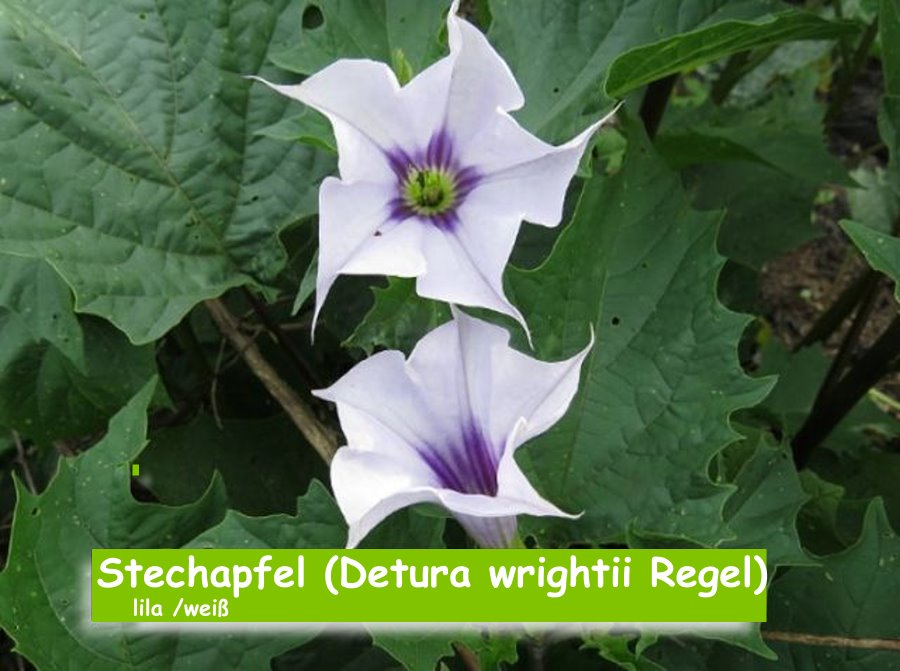
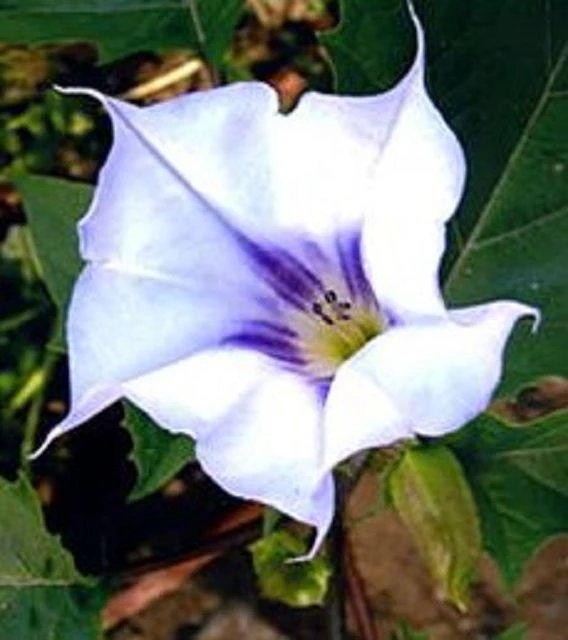


The thorn apple, also known as Datura, is a plant in the nightshade family (Solanaceae).
General information:
Species: There are several species of Datura, including Datura stramonium (common thorn apple), Datura inoxia and Datura metel. These plants are known for their striking flowers and large, spiky fruits.
Appearance: The plants can grow up to 1.5 meters tall and have large, heart-shaped leaves. The flowers are funnel-shaped and can be white, yellow or purple. They often open at night and give off a strong scent.
Fruits: The fruits are spiky capsules that burst open when ripe and release numerous seeds.
Location and care:
Light: Datura prefers sunny locations with direct sunlight.
Soil: A well-drained soil is important. The plant thrives best in slightly acidic to neutral soil.
Watering: Regular watering is required, especially during dry periods, but waterlogging should be avoided.
Fertilization: A balanced fertilization during the growing season can promote growth.
Caution:
Toxicity: All parts of the Datura plant are poisonous and contain alkaloids such as atropine, scopolamine and hyoscyamine. Consumption can lead to severe poisoning that can cause hallucinations, delirium and even death.
Safety: Due to its toxicity, Datura should not be planted in gardens with small children or pets.
Uses:
Traditional medicine: In some cultures, Datura has traditionally been used for medicinal purposes, however this comes with significant risks.
Ornamental plant: Due to its showy flowers, it is sometimes used as an ornamental plant in gardens.