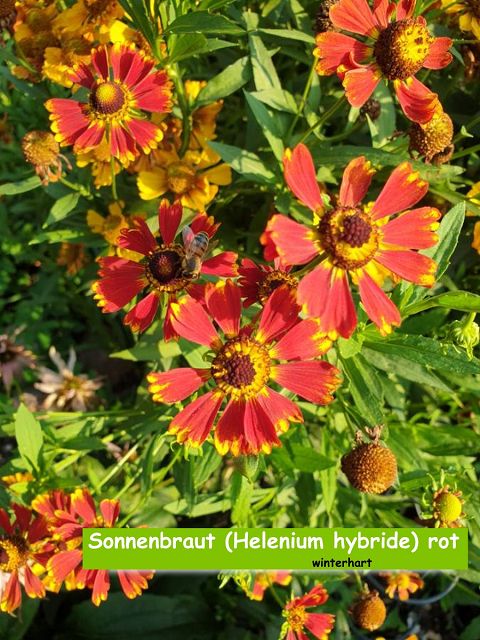
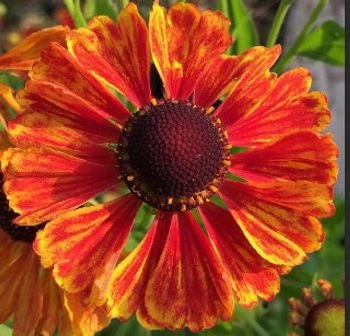
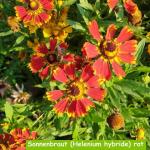
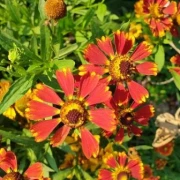
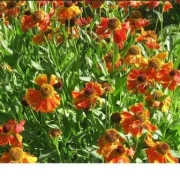
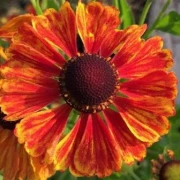

Sneezeweed, scientifically known as Helenium hybridum, is a perennial flowering plant that belongs to the Asteraceae family. It is known for its vibrant flowers and ability to attract pollinators. Here are some details specifically about red varieties of Sneezeweed:
General Information:
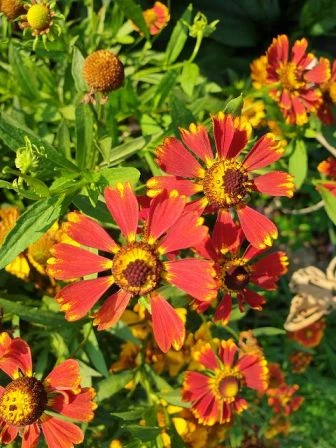
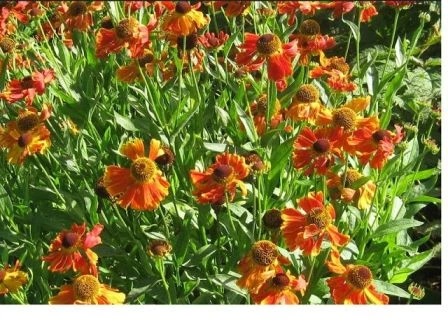
Appearance: Red Sneezeweed typically features daisy-like flowers with a prominent central disc and bright red or reddish-orange petals. The flowers can vary in shade, often appearing more vibrant in full sun.
Height: These plants usually grow between 60 cm and 120 cm (about 2 to 4 feet) tall, making them suitable for the back of flower beds or borders.
Foliage: The leaves are lance-shaped, dark green, and can be quite serrated. They grow alternately along the stem.
Growing Conditions:
Light: Sneezeweed thrives in full sun but can tolerate partial shade. However, full sun will encourage the best flowering.
Soil: It prefers well-drained soil that is rich in organic matter. A slightly acidic to neutral pH is ideal.
Watering: Regular watering is important, especially during dry spells. While they prefer moist conditions, it's crucial to avoid waterlogged soil.
Fertilization: A balanced fertilizer applied in early spring can promote healthy growth and abundant blooms.
Care:
Deadheading: Removing spent flowers (deadheading) encourages further blooming throughout the season.
Division: Every few years, dividing the plants can help maintain their vigor and prevent overcrowding.
Wildlife Attraction:
Sneezeweed is known to attract various pollinators, including bees and butterflies, making it a great addition to pollinator gardens.
Caution:
While Sneezeweed has been used traditionally for medicinal purposes, it’s essential to note that some species may cause allergic reactions in sensitive individuals when handled or ingested.
Uses:
Ornamental Planting: Red Sneezeweed is often used in perennial borders, wildflower gardens, and naturalized areas due to its striking color and ability to thrive in various conditions.
Cut Flowers: The vibrant blooms make excellent cut flowers for arrangements.