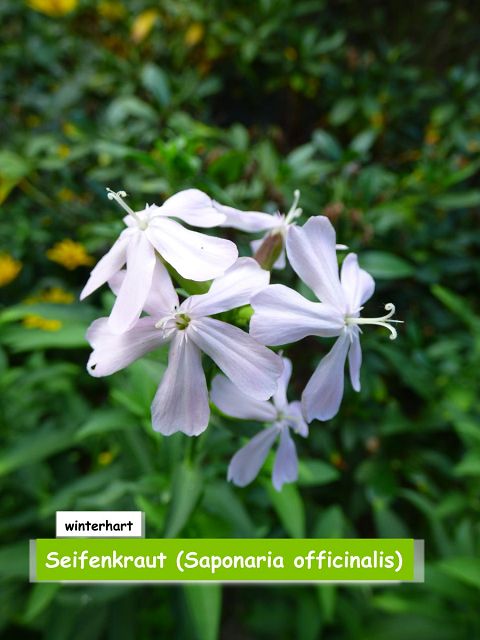
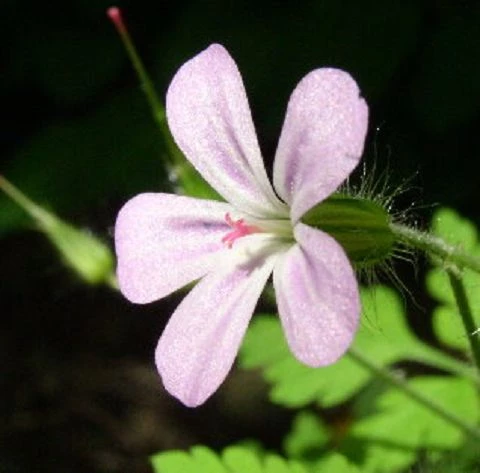


Soapwort, scientifically known as Saponaria officinalis, is a perennial plant in the carnation family (Caryophyllaceae). It is known for its pretty flowers and the soapy properties of its roots.
Characteristics:
Growth form: Saponaria officinalis reaches a height of 30 to 80 cm. The plant has an upright growth and often forms dense stands.
Leaves: The leaves are arranged opposite each other, oval to lanceolate and are green in color. They are usually hairless and can grow up to 10 cm long.
Flowers: The flowers appear in grape-shaped or panicle-like inflorescences. They are usually pink or white and have five petals. The flowering period is from May to September.
Location and care:
Light: Soapwort prefers sunny to partially shaded locations.
Soil: It thrives best in well-drained, nutrient-rich soil. A slightly loamy or sandy soil is ideal.
Watering: During the growing season, the plant needs regular watering, but should not be left standing in water.
Propagation:
Propagation is by seed or by division of the rhizomes. Sowing can be done in spring, while division can be done in autumn or early spring.
Uses:
Ornamental plant: Due to its attractive flowers, soapwort is often used as an ornamental plant in gardens. It is well suited to perennial beds, borders and wildflower meadows.
Medicinal plant: In traditional medicine, Saponaria officinalis was used to make soaps and as a remedy for various ailments due to its foaming properties.