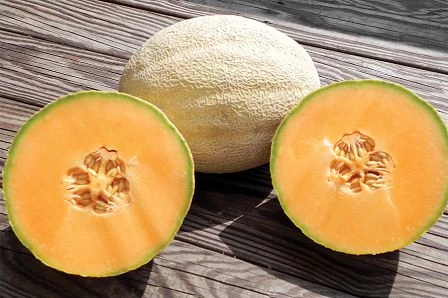



The honeydew melon, scientifically known as Cucumis melo var. inodorus, is a variety of melon prized for its sweet taste and juicy texture. Family: Cucurbitaceae Origin: The honeydew melon is native to Africa and Asia but has spread worldwide. Characteristics: Appearance: Honeydew melons are oval to round in shape and have a smooth, yellow to greenish skin. The skin may also have a slightly net-like pattern. Flesh: The flesh is usually light orange or yellow and very juicy. It has a sweet, mild taste. Size: They usually weigh between 1 and 2 kg. Cultivation: Climate: Honeydew melons require warm weather and plenty of sunlight to grow. They thrive best in temperatures between 20 °C and 30 °C. Soil:
A well-drained, nutrient-rich soil is ideal for growing honeydew melons.
Watering:
Regular watering is important, especially during fruiting.
Uses:
Culinary:
Honeydew melons are often eaten fresh, but can also be used in fruit salads, smoothies or desserts. They are also a popular ingredient in savory dishes.
Nutrients: They are rich in vitamins (especially vitamin C) and contain lots of antioxidants, as well as water, making them a refreshing choice.
Storage:
Honeydew melons should be stored at room temperature until ripe. Once cut, they should be kept in the refrigerator and consumed within a few days.
Give 10 seeds