
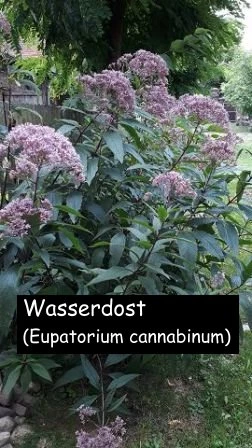
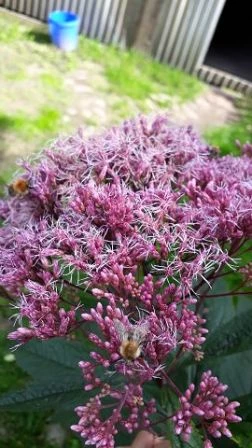
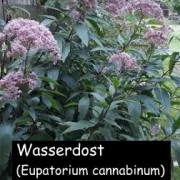
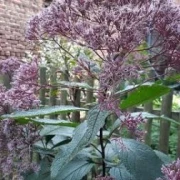
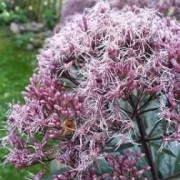
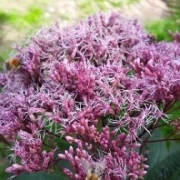

Wasserdost (wissenschaftlicher Name: Eupatorium cannabinum) ist eine mehrjährige Pflanze aus der Familie der Korbblütler (Asteraceae). Sie ist in Europa und Asien verbreitet und wächst häufig in feuchten, nährstoffreichen Böden, insbesondere in Uferbereichen von Gewässern.
Merkmale:
Wuchsform: Wasserdost kann eine Höhe von 1 bis 2 Metern erreichen. Die Pflanze hat einen aufrechten Wuchs und bildet oft dichte Bestände.
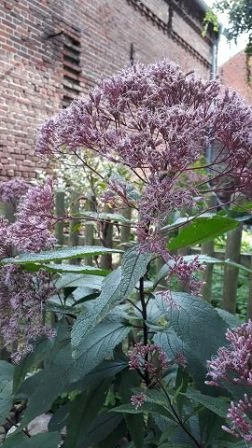
Blätter: Die Blätter sind groß, handförmig und haben eine gezähnte Kante. Sie sind grün und können bis zu 30 cm lang werden. Die Blätter wachsen gegenständig am Stängel.
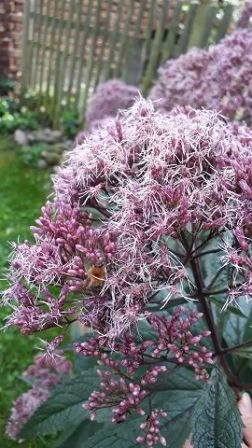
Blüten: Die Blüten erscheinen in dichten, schirmartigen Blütenständen (Dolden) und sind meist rosa bis purpurfarben. Die Blütezeit reicht von Juli bis September. Die kleinen Röhrenblüten ziehen zahlreiche Insekten an, darunter Bienen und Schmetterlinge.
Früchte: Nach der Blüte bilden sich kleine, geflügelte Achänen, die durch den Wind verbreitet werden.
Standort und Pflege:
Licht: Wasserdost bevorzugt sonnige bis halbschattige Standorte.
Boden: Er gedeiht am besten in feuchten, humusreichen Böden mit einem hohen Nährstoffgehalt. Staunässe wird toleriert, da die Pflanze oft in sumpfigen Gebieten vorkommt.
Bewässerung: Da Wasserdost feuchte Bedingungen bevorzugt, ist regelmäßiges Gießen wichtig, besonders während trockener Perioden.
Verwendung:
Zierpflanze: Aufgrund seiner attraktiven Blüten wird Wasserdost häufig in naturnahen Gärten und als Teil von Staudenbeeten verwendet. Er eignet sich gut für Feuchtbiotope oder als Hintergrundpflanze.
Heilpflanze: In der traditionellen Medizin wurde Wasserdost zur Behandlung verschiedener Beschwerden eingesetzt, darunter Fieber und Entzündungen. Es ist jedoch wichtig zu beachten, dass die Verwendung von Heilpflanzen immer mit Vorsicht erfolgen sollte.