

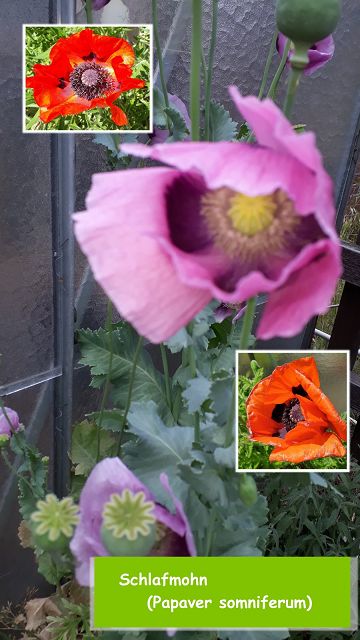

Der Schlafmohn, wissenschaftlich als Papaver somniferum bekannt, ist eine einjährige Pflanze aus der Familie der Mohngewächse (Papaveraceae). Er ist vor allem für seine auffälligen Blüten und die Produktion von Opium bekannt, das aus dem Milchsaft der unreifen Samenkapseln gewonnen wird.
Merkmale:
Wuchsform: Der Schlafmohn erreicht eine Höhe von 60 bis 120 cm. Die Pflanze hat einen aufrechten Wuchs und kann je nach Sorte variieren.
Blätter: Die Blätter sind groß, gefiedert und grau-grün. Sie wachsen wechselständig am Stängel und können bis zu 30 cm lang sein.
Blüten: Die Blüten sind sehr auffällig und können in verschiedenen Farben erscheinen, darunter Weiß, Rosa, Rot und Violett. Sie haben meist einen Durchmesser von 8 bis 12 cm und blühen von Mai bis August.
Früchte: Nach der Blüte entwickeln sich runde, grüne Kapseln, die bei Reife braun werden. Diese Kapseln enthalten die Samen des Schlafmohns.
Standort und Pflege:
Licht: Papaver somniferum bevorzugt sonnige Standorte mit viel Licht.
Boden: Er gedeiht am besten in gut durchlässigen, nährstoffreichen Böden. Ein leicht sandiger oder lehmiger Boden ist ideal.
Bewässerung: Während der Wachstumsperiode benötigt der Schlafmohn regelmäßige Bewässerung, sollte jedoch nicht im Wasser stehen.
Vermehrung:
Die Vermehrung erfolgt durch Samen, die im Frühjahr ausgesät werden können. Die Keimung erfolgt in der Regel innerhalb von zwei bis drei Wochen.
Verwendung:
Medizinische Verwendung: Der Schlafmohn ist bekannt für seine medizinischen Eigenschaften. Aus den unreifen Kapseln wird Opium gewonnen, das Morphin und andere Alkaloide enthält. Diese Substanzen werden in der Schmerztherapie eingesetzt.
Küchenkräuter: Die reifen Samen des Schlafmohns sind essbar und werden häufig in Backwaren wie Brötchen oder Kuchen verwendet. Sie haben einen nussigen Geschmack und sind reich an Nährstoffen.