

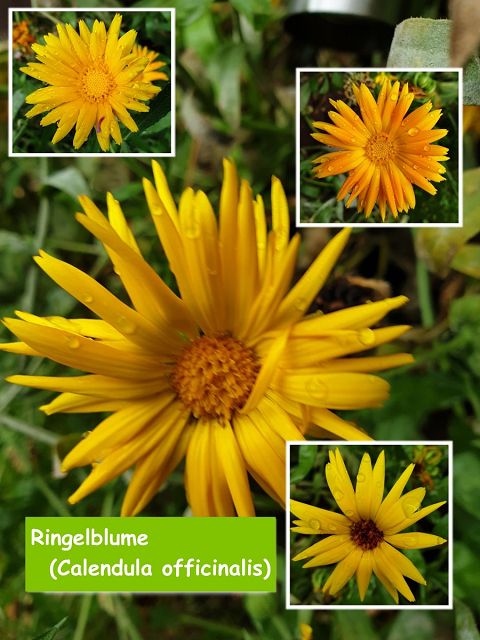

Die Ringelblume, wissenschaftlich als Calendula officinalis bekannt, ist eine einjährige Pflanze aus der Familie der Korbblütler (Asteraceae). Sie ist für ihre leuchtenden Blüten und ihre vielseitige Verwendung in der Gartenkultur sowie in der traditionellen Medizin bekannt.
Wuchsform: Die Ringelblume erreicht eine Höhe von etwa 30 bis 60 cm. Sie hat einen aufrechten, verzweigten Wuchs.
Blätter: Die Blätter sind lanzettlich bis oval, grün und können eine Länge von bis zu 15 cm erreichen. Sie sind oft behaart und wachsen wechselständig am Stängel.
Blüten: Die Blüten sind auffällig und bestehen aus vielen strahlenförmigen Zungenblüten, die in verschiedenen Farbtönen von Gelb bis Orange erscheinen. Die Blütezeit reicht von Mai bis Oktober.
Standort und Pflege:
Licht: Calendula officinalis bevorzugt sonnige Standorte, kann aber auch im Halbschatten gedeihen.
Boden: Sie wächst am besten in gut durchlässigen, humusreichen Böden. Ein leicht sandiger oder lehmiger Boden ist ideal.
Bewässerung: Während der Wachstumsperiode benötigt die Ringelblume regelmäßige Bewässerung, sollte jedoch nicht im Wasser stehen.
Vermehrung:
Die Ringelblume kann durch Samen vermehrt werden. Die Aussaat erfolgt am besten im Frühjahr oder im Spätsommer für eine Herbsternte.
Verwendung:
Zierpflanze: Aufgrund ihrer schönen Blüten wird die Ringelblume häufig in Gärten, Blumenbeeten und als Schnittblume verwendet. Sie zieht Bestäuber wie Bienen und Schmetterlinge an.
Heilpflanze: In der traditionellen Medizin wird die Ringelblume wegen ihrer entzündungshemmenden und heilenden Eigenschaften geschätzt. Sie wird oft in Form von Salben, Tinkturen oder Tees verwendet zur Unterstützung bei Hautproblemen, Wunden und Entzündungen.
Küchenkräuter: Die Blütenblätter sind essbar und können zur Dekoration von Speisen oder in Salaten verwendet werden.