

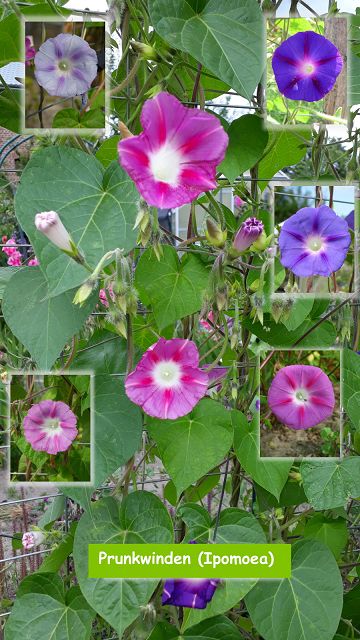

Die Prunkwinden, wissenschaftlich als Ipomoea bekannt, sind eine Gattung von Pflanzen aus der Familie der Windengewächse (Convolvulaceae). Diese Gattung umfasst viele Arten, darunter sowohl einjährige als auch mehrjährige Pflanzen, die für ihre attraktiven Blüten und ihr schnelles Wachstum bekannt sind.
Merkmale:
Wuchsform: Ipomoea-Arten sind meist kletternde oder rankende Pflanzen. Sie können durch ihre langen Triebe Wuchshöhen von mehreren Metern erreichen.
Blätter: Die Blätter sind oft herzförmig oder handförmig und variieren je nach Art in Größe und Form. Sie sind in der Regel grün und können eine glänzende Oberfläche haben.
Blüten: Die Blüten sind auffällig und trompetenförmig, oft in Farben wie Blau, Violett, Rosa, Rot oder Weiß. Sie erscheinen meist in Trauben oder einzeln und blühen tagsüber. Die Blütezeit variiert je nach Art und Standort.
Standort und Pflege:
Licht: Prunkwinden benötigen einen sonnigen Standort, um optimal zu gedeihen.
Boden: Sie bevorzugen gut durchlässige, humusreiche Böden. Einige Arten sind jedoch anpassungsfähig und können in verschiedenen Bodenarten wachsen.
Bewässerung: Während der Wachstumsperiode benötigen Prunkwinden regelmäßige Bewässerung, besonders bei Trockenheit. Zu viel Nässe sollte jedoch vermieden werden.
Vermehrung:
Prunkwinden können durch Samen oder Stecklinge vermehrt werden. Die Aussaat erfolgt am besten im Frühjahr nach dem letzten Frost.
Verwendung:
Zierpflanze: Aufgrund ihrer schönen Blüten werden Prunkwinden häufig in Gärten, auf Terrassen und Balkonen sowie als Sichtschutz verwendet. Sie eignen sich hervorragend für Spaliere, Zäune und andere Kletterhilfen.
Essen: Einige Arten von Ipomoea, wie die Süßkartoffel (Ipomoea batatas), werden auch als Nahrungsmittel kultiviert.