
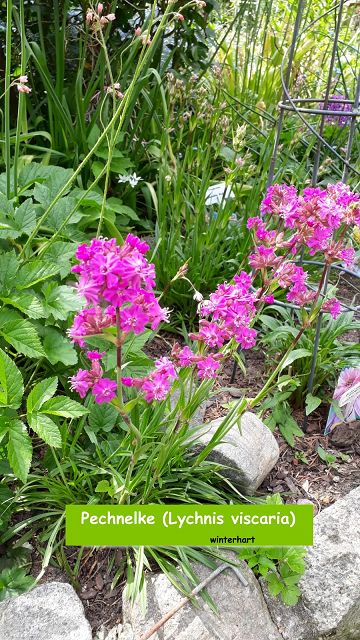

Die Pechnelke, wissenschaftlich als Lychnis viscaria bekannt, ist eine mehrjährige Pflanze aus der Familie der Nelkengewächse (Caryophyllaceae). Sie ist für ihre auffälligen Blüten und ihren robusten Wuchs bekannt.
Merkmale:
Wuchsform: Die Pechnelke erreicht eine Höhe von etwa 30 bis 60 cm. Sie hat einen aufrechten, buschigen Wuchs und bildet oft dichte Bestände.
Blätter: Die Blätter sind schmal, lanzettlich und grün. Sie sind meist gegenständig angeordnet und können eine Länge von bis zu 10 cm erreichen. Die Blätter sind oft leicht klebrig (viskös), was der Pflanze ihren Namen gibt.
Blüten: Die Blüten sind auffällig und kommen in verschiedenen Farben vor, hauptsächlich in leuchtendem Rosa oder Rot. Sie erscheinen in traubenartigen Blütenständen und blühen von Mai bis Juli. Jede Blüte hat fünf gezackte Blütenblätter.
Standort und Pflege:
Licht: Lychnis viscaria bevorzugt sonnige Standorte, kann aber auch in halbschattigen Bereichen gedeihen.
Boden: Die Pflanze wächst am besten in gut durchlässigen, nährstoffreichen Böden. Sie ist jedoch anpassungsfähig und kann auch in weniger fruchtbaren Böden gedeihen.
Bewässerung: Die Pechnelke benötigt moderate Bewässerung, ist jedoch relativ trockenheitsresistent, sobald sie etabliert ist.
Vermehrung:
Die Pechnelke kann durch Samen oder vegetative Vermehrung (z.B. durch Teilung) vermehrt werden. Die Aussaat erfolgt am besten im Frühjahr.
Verwendung:
Zierpflanze: Aufgrund ihrer attraktiven Blüten wird die Pechnelke häufig in Gärten, Rabatten und als Schnittblume verwendet.
Wildpflanze: In einigen Regionen wird sie auch als Wildpflanze geschätzt und trägt zur Biodiversität bei.