

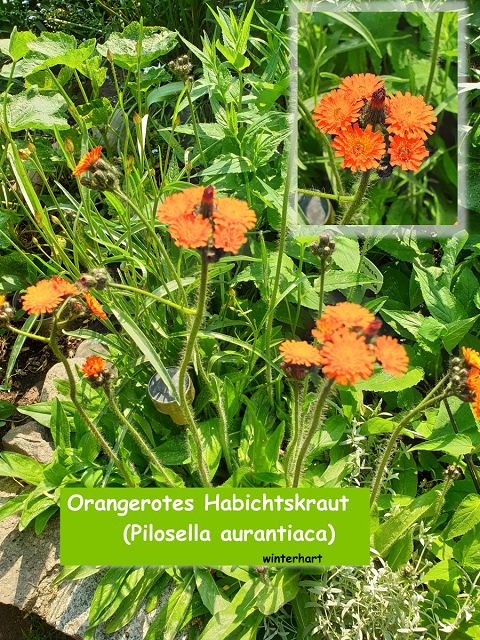

Das orangerote Habichtskraut, wissenschaftlich als Pilosella aurantiaca bekannt, ist eine mehrjährige Pflanze aus der Familie der Korbblütler (Asteraceae). Diese Pflanze ist für ihre auffälligen, leuchtend orangefarbenen Blüten und ihre Robustheit bekannt.
Merkmale:
Wuchsform: Das orangerote Habichtskraut erreicht typischerweise eine Höhe von 20 bis 60 cm. Es hat einen aufrechten Wuchs und bildet oft dichte Bestände.
Blätter: Die Blätter sind schmal, lanzettlich und können eine Länge von bis zu 15 cm erreichen. Sie sind meist grün und haben eine leicht behaarte Oberfläche. Die Blätter wachsen in einer Rosette an der Basis der Pflanze.
Blüten: Die Blüten sind leuchtend orange bis rot-orange und erscheinen in körbchenartigen Blütenständen. Sie blühen in der Regel von Mai bis September und ziehen viele Bestäuber wie Bienen und Schmetterlinge an.
Standort und Pflege:
Licht: Pilosella aurantiaca bevorzugt sonnige Standorte, kann aber auch in halbschattigen Bereichen gedeihen.
Boden: Die Pflanze wächst am besten in gut durchlässigen, nährstoffreichen Böden, ist jedoch auch anpassungsfähig an verschiedene Bodenarten.
Bewässerung: Sie benötigt moderate Bewässerung, ist jedoch relativ trockenheitsresistent, sobald sie etabliert ist.
Vermehrung:
Das orangerote Habichtskraut kann durch Samen oder vegetative Vermehrung (z.B. durch Teilung) vermehrt werden. Die Aussaat erfolgt am besten im Frühjahr.
Verwendung:
Zierpflanze: Aufgrund ihrer auffälligen Blüten wird das orangerote Habichtskraut häufig in Gärten, Rabatten und als Schnittblume verwendet.
Wildpflanze: In einigen Regionen wird es auch als Wildpflanze geschätzt und trägt zur Biodiversität bei.